Generic selectors
Exact matches only
Search in title
Search in content
Post Type Selectors
guides
products
Filter by Categories
Anti-Snoring Reviews
Bedding
Bedding Information
Bedding Reviews
Best Bed Frames
Best Comforters
Best Mattress
Best Mattress Pads
Best Mattress Protectors
Best Mattress Toppers
Best Pillowcases
Best Pillows
Best Sheets
Interviews
Mattress Accessories
Mattress Comparisons
Mattress Coupons
Mattress Information
Mattress Reviews
Mattress Sales
Mattress Sizes
Mattress Topper Reviews
Pillow Reviews
Sheet Reviews
Sleep
Sleep Environment
Sleep Products
Sleep Tracker Reviews
Uncategorized
Weighted Blanket Reviews
Our editors test & choose the products we write about. When you buy through links on our site, we may earn a commission. Learn More.

The Best Organic Mattresses of 2026

Written by Tuck Staff

Quick Overview

Many consumers today prefer to buy products that are made from natural materials, have a relatively minimal environmental footprint, and contain few (if any) chemicals that are hazardous to human health. Mattress shoppers are no different. The current mattress market includes a wide range of models that are suitable for eco-friendly buyers – as well as mattresses that are erroneously advertised as being ‘green.’

When shopping for a green mattress, certifications are a major concern. Beds made from organic and/or natural materials should carry certifications that indicate low human health risks, such as OEKO-TEX Standard 100 and CertiPUR US. Other certifications, such as the Global Organic Textile Standard (GOTS) and GreenGuard, indicate the materials have a low environmental impact.

In our Buyer’s Guide, you can learn more about selecting a natural, organic mattress that’s good for the environment and good for your sleep. First, we share our top picks for the best eco-friendly beds sold today. These are all based on verified customer and owner experiences, as well as intensive product research and analysis.

Best Organic Mattresses
First Time Buying a Mattress?

Hop down to our Buyer’s Guide for a crash course on finding the best organic mattress.


The Best Organic Mattresses - Reviewed

Best OverallBirch Mattress

Best Overall – Birch Mattress

Highlights

  • Medium Firm (6)
  • 120-night sleep trial
  • Lifetime warranty
  • Responsive latex hybrid design
  • GOLS and GOTS certifications
Up to 25% off sitewide
Claim Discount

Best OverallBirch Mattress

birchliving.com

Shop Now

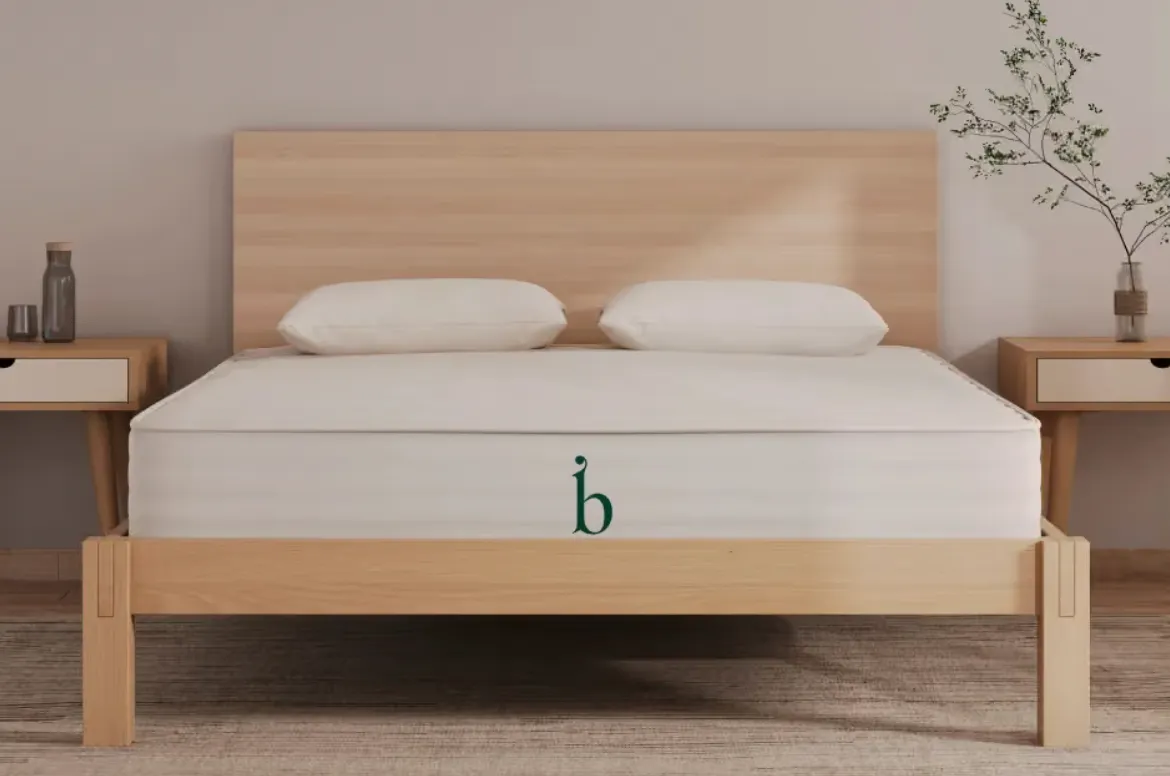
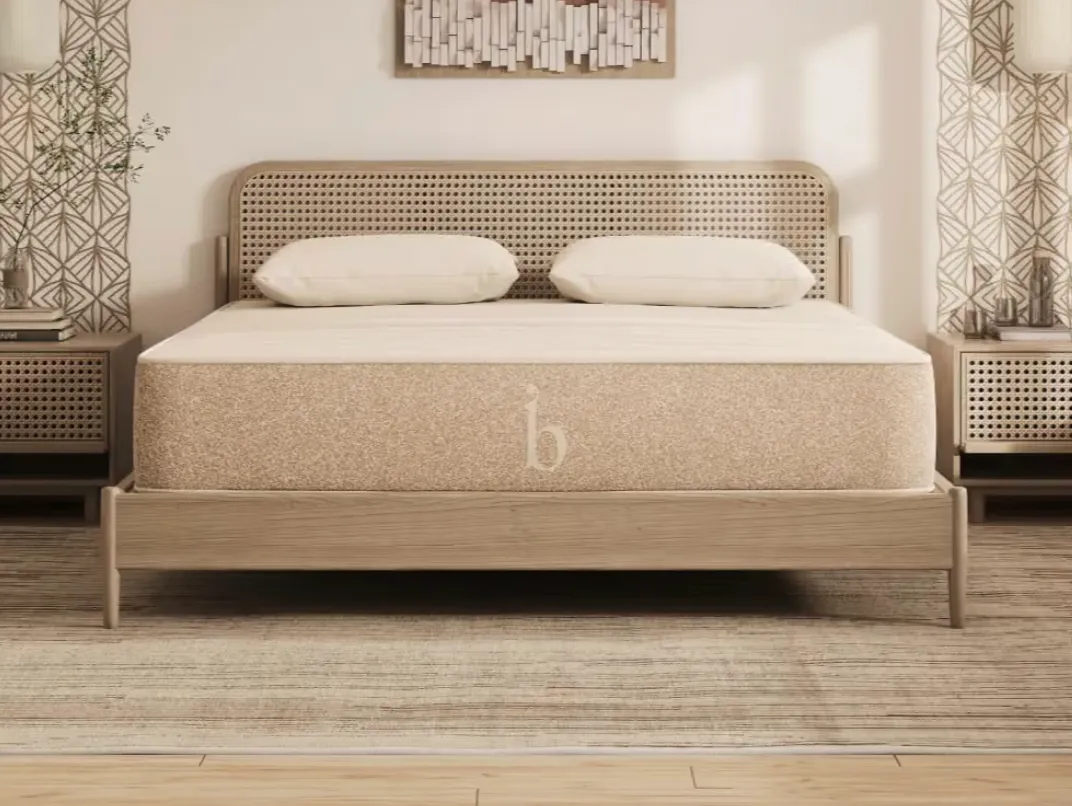
The Birch Natural Mattress earns our top spot because it offers an appealing balance of cushioning, support, bounce, and breathability. The combination of latex, cotton, and wool delivers a naturally breathable, responsive surface reinforced with sturdy pocketed coils. Based on our testing, it’s a good match for the widest slice of side, back, and combination sleepers, as well as couples, people with back pain, and those who run hot in bed.

The latex responds quickly to movement, so you don’t feel stuck, and it relieves pressure at the shoulders and hips without sacrificing spinal support. The organic wool acts as a natural fire barrier and wicks heat away from the surface, which helped the bed sleep cool during our heat retention testing. Motion isolation was moderate — the coils add some bounce — while the certified organic materials contribute to both temperature control and long-term durability. Because the latex and wool are less prone to breaking down than cheaper synthetic foams, the bed should hold its shape and support for years. Back and stomach sleepers of average weight tend to benefit most.

Beyond performance, the Birch Natural is backed by a generous 120-night sleep trial and a lifetime warranty. It ships free within the contiguous United States. Given the quality of its organic components and its versatility across sleep styles, it delivers strong value for a certified organic hybrid. For most shoppers who want one bed to do it all, this is where we’d start.

The Bottom Line.

The Birch Natural blends organic latex, wool, and cotton into a responsive medium firm hybrid that works for nearly everyone — the safest first pick in the organic category.

  • Combination sleepers: The responsive latex surface makes it easy to shift positions through the night without feeling trapped, so you stay comfortable no matter how you move.
  • Back and stomach sleepers between 130 and 230 pounds: The medium firm feel keeps the hips lifted and the spine aligned, delivering the support these positions rely on
  • Hot Sleepers: Breathable organic wool and cotton paired with an airy coil layer helped the bed shed heat throughout our testing.

Not Recommended For...

  • Strict side sleepers under 130 pounds: Lighter sleepers may want more give at the shoulders than this medium firm surface provides.
  • Fans of deep memory foam contouring: The bouncy latex feel won’t satisfy those who prefer to sink into their mattress.

Best HybridLeesa Natural Hybrid

Best Hybrid – Leesa Natural Hybrid

Highlights

  • Medium Firm (6)
  • 120-night sleep trial
  • Lifetime warranty
  • Organic latex comfort layer over pocketed coils
  • Certified organic cotton and wool components
25% off Leesa mattresses
Claim Discount

Best HybridLeesa Natural Hybrid

leesa.com

Shop Now

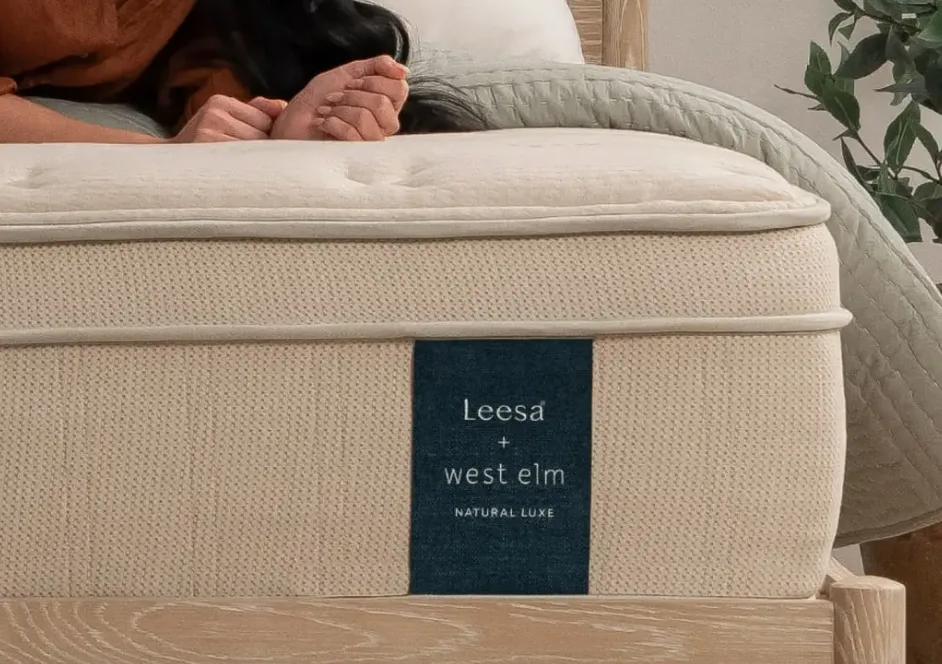
The Leesa Natural Hybrid is a standout mattress that pairs organic materials with the sturdy, supportive feel that hybrid fans want. Its organic latex comfort layer and pocketed coil system give it more lift and edge stability than an all-foam bed, while certified organic cotton and wool keep the surface breathable. It’s a good match for couples, back sleepers, and anyone who likes to feel “on top” of the mattress rather than buried in it.

Organic latex rests over a base of individually wrapped coils, and the mattress is wrapped in an organic cotton cover with a wool fire barrier. The result is a supportive medium firm surface with a pleasant, buoyant bounce. In our testing, the latex eased pressure at the shoulders and hips while the coils held the spine in line and reinforced the perimeter — edge support was a standout quality. The coils transmit a bit more motion than an all-foam bed, though the latex layer dampens it reasonably well. The organic wool helps regulate temperature, and the certified materials add to the expected lifespan by resisting the sagging and body impressions that plague lower-grade foams. Average-weight and heavier back sleepers benefit most.

The mattress comes with a 120-night sleep trial and a lifetime warranty. Shipping is free to all 50 states. Considering its certified organic build and dependable hybrid support, the Leesa Natural Hybrid is a sensible choice for shoppers who want responsiveness and reinforced edges in one package.

The Bottom Line.

A supportive, breathable organic hybrid with excellent edge support — ideal for couples and back sleepers who prefer a responsive, on-top feel.

  • Couples: Strong edge support and a stable coil base make the full surface usable, so partners can spread out without rolling toward the middle.
  • Back Sleepers: The medium firm coil support keeps the lumbar region lifted and the spine neutral.
  • People who want to sleep “on” their mattress: The bouncy latex-and-coil pairing keeps you resting near the surface.

Not Recommended For:

  • Petite side sleepers: Those who need extra shoulder cushioning may find the surface too firm.
  • Couples: The added bounce means a bit more movement transfers across the bed.

Best ValueBirch Essential

Best Value – Birch Essential

Highlights

  • Firm (7)
  • 120-night sleep trial
  • Lifetime warranty
  • Streamlined organic build at a lower price
  • Certified organic cotton and wool components
Up to 25% off sitewide
Claim discount

Best ValueBirch Essential

birchliving.com

Shop Now

The Birch Essential delivers certified organic materials at an approachable price. It trims the build without abandoning the organic cotton, wool, and natural support that define the Birch brand. For budget-minded shoppers who refuse to give up on responsibly sourced materials, it’s a strong entry point — and a good match for guest rooms, growing households, and first-time organic buyers testing the waters.

The Essential uses a simpler layering scheme than the Birch Natural, pairing supportive coils with an organic wool and cotton comfort surface for a firm feel. In our testing, it offered dependable support and mild contouring, keeping the spine aligned for back and stomach sleepers of average weight. The trade-off versus the flagship is subtle: you get less of the pillowy latex cushioning up top, so pressure relief at the shoulders and hips is good rather than exceptional. Motion isolation is moderate, and the breathable organic wool and cotton helped the bed sleep cool. 

Like its siblings, the Birch Essential ships free within the contiguous U.S. and arrives with a 120-night sleep trial. A lifetime warranty reflects the brand’s confidence in its materials. Weighed against its price, the combination of certified organic components and solid all-around performance makes it one of the easiest value recommendations in the category.

The Bottom Line.

The Birch Essential brings certified organic materials within reach, offering dependable medium firm support at a friendlier price than the flagship.

  • Budget-conscious shoppers: You get genuine organic cotton and wool without paying flagship prices, making certified materials far more accessible.
  • Anyone buying a guest room mattress: Its balanced support suits occasional sleepers of many body types and positions.
  • Back and stomach sleepers between 130 to 230 pounds: The medium firm surface keeps the hips supported and the spine neutral.

Not Recommended For:

  • Side sleepers under 130 pounds: The trimmed comfort layer offers less cushioning at the shoulders and hips than the flagship.
  • Couples: Motion isolation is fair at best, so co-sleepers may wake each other up with nighttime movements.

Best for Side SleepersNolah Natural

Best for Side Sleepers – Nolah Natural

Highlights

  • Medium Firm (6)
  • 120-night sleep trial
  • Lifetime warranty
  • Organic latex over supportive coils
  • Zoned support and certified organic cover materials
30% off sitewide
Claim Discount

Best for Side SleepersNolah Natural

nolahmattress.com

Shop Now

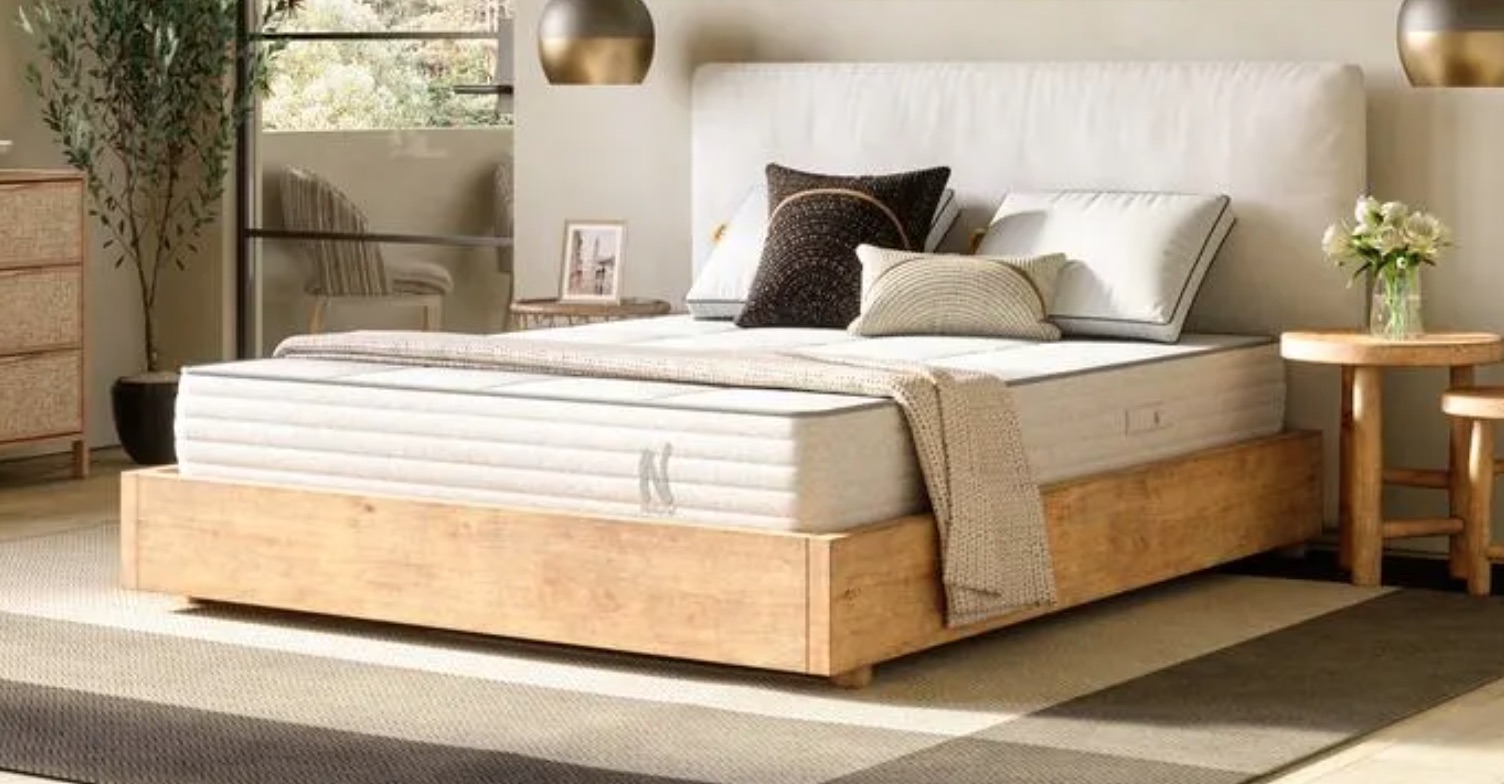
Side sleepers put concentrated pressure on their shoulders and hips, and the Nolah Natural is built to answer that. Its organic latex comfort layer cradles pressure points while a coil system keeps the spine aligned — this is the balance many side sleepers need. Based on our testing, it’s also a good match for combination sleepers who want cushioning without sinking into a soft, unsupportive surface when they change positions.

The Nolah Natural layers organic Talalay latex over a base of pocketed coils, and the mattress is wrapped in a breathable organic cover with a natural wool fire barrier. The latex contours to the curve of the shoulder and hip, easing the pressure that builds up in the side position, while the zoned coils firm up beneath the midsection to prevent the hips from dropping too far. In our pressure-mapping, the shoulders and hips read noticeably lower than on firmer beds. The latex-and-coil pairing keeps the surface responsive, so combination sleepers can turn easily. Side sleepers between 130 and 230 pounds benefit most, though lighter side sleepers will also appreciate the give.

The Nolah Natural ships free to customers in the contiguous U.S. It comes with a 120-night sleep trial, and is further backed by a lifetime warranty. For sleepers whose top priority is pressure relief at the shoulders and hips, its organic latex build makes it our standout side-sleeping recommendation.

The Bottom Line.

With organic latex tuned to cradle the shoulders and hips, the Nolah Natural is our top pick for side sleepers who want cushioning and support in one bed.

  • Side sleepers: The organic latex contours to the shoulders and hips, relieving the pressure that builds up in the side position while keeping the spine aligned.
  • Combination sleepers: The responsive latex surface makes it easy to switch positions without feeling stuck.
  • People with lower back pain: Zoned coils firm up under the hips so you get pressure relief without sagging.

Not Recommended for:

  • Strict stomach sleepers over 230 pounds: These individuals may want a firmer surface to keep the hips fully lifted.
  • People who want minimal contouring: The cushioning latex top delivers more give than firm-mattress lovers prefer.

Best LuxuryBirch Luxe

Best Luxury – Birch Luxe

Highlights

  • Medium Firm (6)
  • 120-night sleep trial
  • Lifetime warranty
  • Premium organic latex, wool, and cashmere-blend cover
  • Zoned coil support and certified organic materials
Up to 25% off sitewide
Claim Discount

Best LuxuryBirch Luxe

birchliving.com

Shop Now

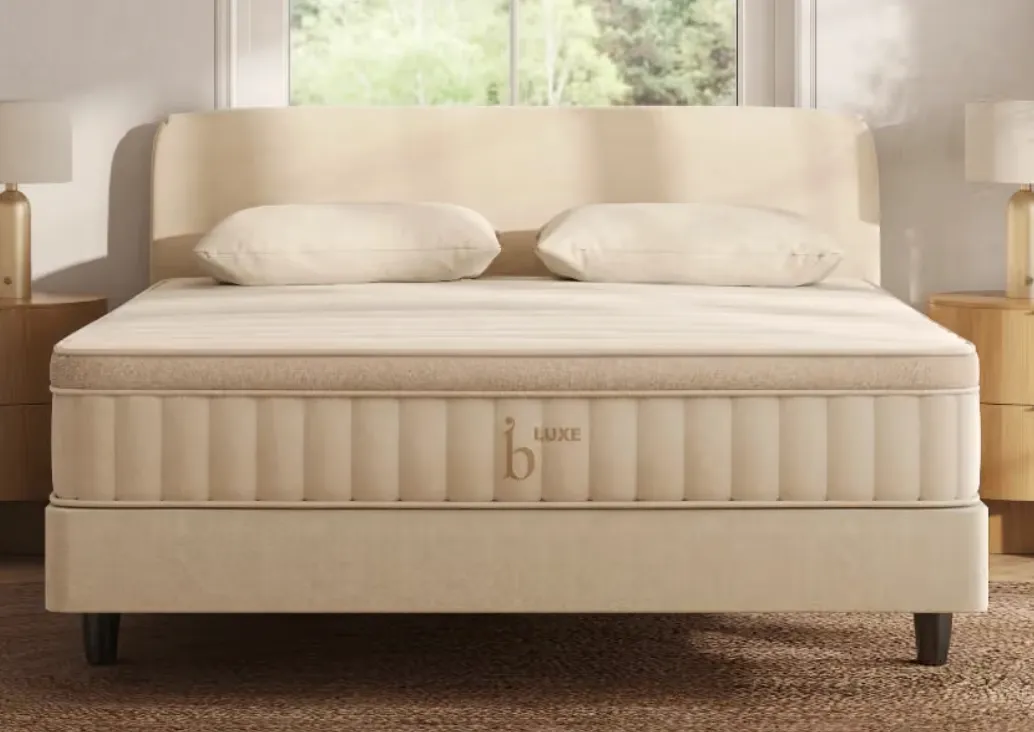
The Birch Luxe is our top luxury pick because it elevates the brand’s organic formula with premium materials and a more indulgent surface. A quilted Euro-top and additional organic comfort layers give it a plusher feel than the standard Birch Natural, but without giving up the support that keeps your spine aligned. It’s a good match for shoppers who want the comfort of a high-end bed built from responsibly sourced, certified organic components.

The Luxe stacks a quilted Euro-top over organic latex and organic wool, all resting on a zoned pocketed coil system and encased in an organic cotton cover. In our testing, the extra cushioning produced a softer initial feel and deeper pressure relief at the shoulders and hips, while the zoned coils reinforced support under the lumbar region to keep the spine neutral. The higher-grade organic materials also help the surface resist the body impressions that would otherwise form in a soft comfort layer over time. Side sleepers and average-weight back sleepers who want a pillowy-yet-supportive surface will benefit most from sleeping on this mattress.

The Birch Luxe ships free and comes with a 120-night sleep trial. A lifetime warranty covers manufacturing defects for as long as you retain original ownership of the mattress. A combination of certified organic materials, thoughtful zoned construction, and a genuinely luxurious feel makes it a defensible splurge for shoppers who won’t compromise on either comfort or sourcing.

The Bottom Line.

The Birch Luxe layers premium organic materials under a plush Euro-top, delivering high-end comfort and zoned support for shoppers who want luxury without synthetic materials.

  • Side sleepers wanting a plush feel: The Euro-top and extra latex cushion the shoulders and hips for deeper pressure relief.
  • High-end organic shoppers: Cashmere-blend and organic fibers deliver a luxurious surface built from certified materials.
  • Back sleepers between 130 and 230 pounds: Zoned coils keep the lumbar region supported even under the softer top layers.

Not Recommended for...

  • Budget shoppers: The premium build carries a higher price than the Birch Natural or Essential.
  • Stomach sleepers needing strong support: The plush surface may let the hips dip more than this position prefers.

Best for Back PainBear Natural

Best for Back Pain – Bear Natural

Highlights

  • Medium Firm (6)
  • 120-night sleep trial
  • Lifetime warranty
  • Organic latex over supportive coils
  • Zoned support and certified organic cover materials
35% off sitewide
Claim Discount

Best for Back PainBear Natural

bearmattress.com

Shop Now

Back pain often traces back to poor spinal alignment, and the Bear Natural is built to keep the spine in line. Its organic latex comfort layer and supportive coil base combine to hold the lumbar region steady while easing pressure elsewhere. Based on our testing, it’s a good match for back and combination sleepers who want firm, reliable support without giving up organic materials.

The Bear Natural pairs organic latex with a zoned pocketed coil system, finished in an organic cotton cover with a natural wool fire barrier. The medium firm surface resists sagging to keep the spine and hips aloft — dipping in these areas is a common root of lower back discomfort. In our testing, the zoned coils firmed up under the midsection to cradle the lumbar spine while the latex added just enough contouring to relieve pressure at the shoulders and hips. The responsive build keeps sleepers from feeling stuck, and the breathable organic wool and cotton helped regulate temperature. Motion isolation is moderate. Back sleepers weighing at least 130 pounds should enjoy this mattress, especially those who frequently wake up with a stiff lower back.

The Bear Natural ships free within the contiguous U.S. All orders include a 120-night sleep trial and lifetime warranty. For sleepers whose main concern is waking up without an aching back, its supportive organic construction makes it our top recommendation in this category.

The Bottom Line.

The Bear Natural pairs organic latex with zoned coil support to keep the spine aligned, making it our pick for sleepers battling lower-back pain.

  • Sleepers who want back support: Zoned coils reinforce the lumbar region and resist sagging, keeping the spine neutral through the night.
  • Back sleepers of average and higher weight: The medium firm surface holds the hips up and prevents the spine from bowing.
  • Combination sleepers: The responsive latex layer makes position changes easy without sacrificing support.

Cons

  • Lighter side sleepers: The firmer, support-focused feel offers less shoulder cushioning than lighter side sleepers may want.
  • Those who prefer plush beds: This bed prioritizes support over deep cushioning.

Best for KidsBirch Kids Natural Mattress

Best for Kids – Birch Kids Natural Mattress

Highlights

  • Flippable with two firmness levels (6,7)
  • 120-night sleep trial
  • Lifetime warranty
  • Non-toxic, certified organic materials
  • Durable build made for growing kids
Up to 25% off sitewide
Check Price

Best for KidsBirch Kids Natural Mattress

birchliving.com

Shop Now

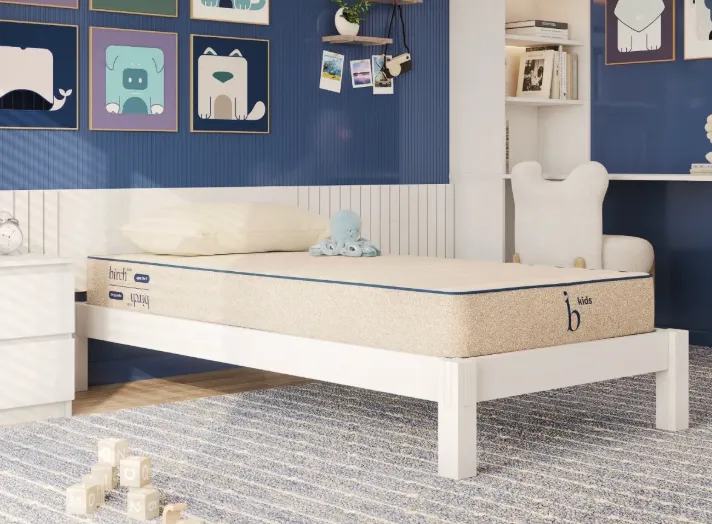
Parents shopping for a child’s bed care about two things above all: safe materials and durability. The reversible Birch Kids Natural delivers both, using non-toxic, certified organic components in a build intended for growing children. It’s also a good match for families prioritizing clean materials.

The Birch Kids Natural combines organic latex and organic wool over a supportive coil base, wrapped in an organic cotton cover. Its dual-sided design features a firm (7) surface meant to promote healthy growth in very young children, and a medium firm (6) surface that feels slightly softer and may be more comfortable for kids as they get older. The certified organic materials mean no harsh chemical off-gassing — a real concern for parents furnishing a child’s room — and the organic wool adds a natural fire barrier while helping regulate temperature so kids don’t overheat. The sturdy coil construction resists the wear that comes with jumping and everyday kid use, and motion isolation is adequate for restless sleepers who thrash through the night.

The Birch Kids Natural is backed by a 120-night sleep trial and lifetime warranty. Shipping is free to customers in the contiguous U.S. For families weighing safety, durability, and organic sourcing together, it offers dependable value in a bed built to grow with a child.

The Bottom Line.

The Birch Kids Natural pairs non-toxic organic materials with a durable, medium firm build sized for children — a safe, long-lasting choice for growing families.

  • Growing children: The flippable design features two distinct sides, each intended for a specific age group.
  • Households that prioritize green materials: Certified organic components mean no harsh chemical off-gassing in a child’s room.
  • Shoppers who want to invest in a durable kid-friendly bed: The sturdy coil build stands up to years of everyday kid use.

Not Recommended For...

  • Teens and adults: The feel and sizing are tuned for children rather than full-grown sleepers.
  • Shoppers on a tight budget: Certified organic materials carry a higher price than conventional kids’ mattresses.

Best Natural Organic Mattress Buyer's Guide

Below, we share everything sleepers need to consider when buying an organic mattress, along with our best tips for buying a new mattress.

What You Need to Know About Organic Mattresses

Green technology and innovation have impacted a wide range of industries in recent years — from automobiles and construction to clothing and cosmetics — and this growing demand has led many mattress manufacturers to offer sustainable products as well.

However, terms like ‘green,’ ‘natural’ and ‘eco-friendly’ are often misused or exaggerated within the mattress industry. This trend, whereby companies use misleading terms to promote their products as natural or organic, is known as ‘greenwashing.’ To further complicate the issue, a regulatory body that fact-checks green claims for mattress makers has not yet been created, although certifications are available for certain mattress materials like foam, latex, and fabrics.

This guide will explore green mattress terminology, materials, and certifications, with the goal of giving you the information you need to know to make an informed mattress purchase. By the end, you’ll be able to wade through the lingo and ensure the mattress you’re buying is truly sustainable and eco-friendly.

What Is a Green Mattress?

A true green mattress features natural and/or organic materials in the cover, comfort layers, and support core. These materials include:

  • Natural latex
  • Plant-based polyfoam and memory foam
  • Organic fibers like cotton and wool in the cover
  • Fire socks made of wool, cotton, thistle, or Kevlar

It’s important to note: mattresses are never 100% natural or organic. Most green mattresses today range from 60% to 95% natural and/or organic.

Additionally, ‘half-organic’ and ‘half-natural’ mattresses are also available. These include some green components, but are not considered true green mattresses. Some brands use terms like ‘green’ and ‘eco-friendly’ to describe one component or stage of the mattress production process, even though the model as a whole is not primarily natural or organic. This is an example of the greenwashing trend we discussed above.

Pros and Cons of a Green Mattress

  • Potential Health Benefits: Some mattresses made today use petrochemicals, adhesives, dyes, flame retardants, and other materials that may pose a risk to human health. Mattress models that meet the standards for green and/or organic certification are much less likely to contain materials that are harmful to humans.
  • Reduced Environmental Impact: Today’s consumers are mindful of the relationship between industrial production and environmental degradation, as well as climate change. True green mattresses create a smaller environmental footprint in terms of both raw materials production and industrial processing.
  • Above-Average Lifespan: Natural products tend to last longer than synthetic materials. As a result, green and organic mattresses typically have longer product lifespans than mattresses designed with chemicals and manmade components. Additionally, latex is considered exceptionally durable; latex mattresses usually perform for at least eight years, which is longer than the average lifespan for all mattresses (which is generally six to seven years).
  • Naturally Cooler Sleep Surface: Organic mattresses are made from non-toxic, naturally breathable materials like moisture-wicking wool and cotton, aerated organic latex, and airflow-promoting pocketed coils. Together, these make for a mattress that regulates temperature well and keeps hot sleepers cool.

Cons

  • High Price-Point: True green mattresses can be quite expensive, and models that have received certifications (such as GOLS and GOTS) may be priced even higher. Obtaining certifications can be a costly process for mattress manufacturers, and the raw materials are typically more expensive than their synthetic counterparts. Customers should expect to spend at least $1,500 on a Queen-size green mattress.
  • Narrow Selection: True green mattresses are less common than non-green models, leaving customers with fewer options than they may prefer. This is particularly true for mattress buyers with latex allergies who are looking for non-latex models, as well as those with specific firmness or thickness criteria.
  • Limited Company History: Mattresses made with traditional, non-green materials have a longer track record. Green and organic materials, on the other hand, have a more limited history on the market. Additionally, a sizable percentage of online-only mattress brands have been in business for five years or less, meaning that the long-term durability of their mattress models has not been accurately evaluated.

Choosing the Best Organic Mattress

To find the best organic mattress for you, you need to answer two main questions:

  1. First, does the mattress satisfy your concerns as an eco-conscious shopper?
  2. Secondly, is the mattress construction and firmness suitable to your needs as a sleeper?

To answer these questions, you’ll need to have some background knowledge on what makes a mattress eco-friendly, and what makes it supportive for you as a sleeper. Let’s start with the eco-friendly question, by evaluating the sustainable materials these mattresses are made from, and the green certifications they can receive for their production and manufacturing practices.

How Flammability Standards Have Affected the Non-Toxic Mattress Movement

In 2007, the Consumer Product Safety Commission (CPSC) passed a new flammability standard that targeted mattresses. Under the current regulation, mattresses manufactured for sale in the U.S. must be flame- and fire-resistant. The law originally targeted the high number of annual deaths caused by fires in bed. However, many mattress manufacturers have turned to chemical flame retardants to address the issue — many of which pose a serious health risk to humans.

The most damaging fire retardants used in mattresses are polybrominated diphenyl ethers, or PBDEs, which have been linked to liver, thyroid, and neurodevelopmental problems. PBDEs are monitored by the Environmental Protection Agency (EPA), and have been banned in Maine and Washington state. Initially, mattresses were doused in PBDE-based retardant, but this method is now prohibited. However, some mattress foams are treated with PBDEs to make them more fire-resistant, and these may also pose similar health risks.

A true green mattress will not contain any chemical flame retardants. Instead, most green models feature fire socks that act as flame barriers. Fire socks are usually made from silica, but some mattresses have fire socks made from more natural materials like wool or thistle. Kevlar, a material that requires no chemical treatment, may also be used. In any case, a chemical-free fire sock is considered much greener and healthier for humans than any chemical flame retardant.

Some mattresses do not utilize chemical treatments, nor do they feature a fire sock or flame barrier; because their mattress materials have a higher fuel load and take longer to burn, these manufacturers are able to meet state and federal flammability standards.

What Green Certifications Exist for Organic Mattresses?

How can customers differentiate between green and non-green mattresses? Certifications that focus on human health and/or environmental impacts are one way to tell these products apart. Certifications are awarded to mattresses at different stages of production, and may focus on human health risks and/or environmental impacts.

The most prominent certifications that focus on human health risk factors include the following:

  • OEKO-TEX Standard 100: This is the standard certification from the International Association for Research and Testing in the Field of Textile and Leather Ecology, or OEKO-TEX, which consists of 18 independent research and testing institutes in Europe and Japan. This standard does not evaluate mattresses for being organic, but rather ensures the product has not exceeded emission limits for certain chemicals that pose a health risk to humans. These chemicals include volatile organic compounds (VOCs), formaldehyde, PBDEs and other flame retardants, and dyes that trigger allergies.
  • CertiPUR-US: The CertiPUR-US certification tests for chemical emissions for polyurethane foam (polyfoam) used in mattress layers, as well as harmful materials like PBDEs and lead. It’s important to note that other certifying bodies, such as the Global Organic Textile Standard (GOTS) and the Global Organic Latex Standard (GOLS), will not certify mattresses that contain any polyurethane foam (see below).
  • Eco-Institut: The Eco-Institut is an independent certification organization based in Germany that evaluates textiles and building materials for hazardous emissions and chemical substances. Within the mattress industry, the Eco-Institut certification is most commonly associated with latex mattresses (learn more).

The following certifications focus primarily on environmental impacts:

  • Global Organic Textile Standard (GOTS): The GOTS certification evaluates organic fibers, including both raw materials and their derivative products. In order to be GOTS certified, a mattress must be made with at least 70% materials that are certified as organic. Furthermore, the remaining 30% or less cannot contain certain materials, including polyfoam or formaldehyde.
  • Global Organic Latex Standard (GOLS): The GOLS, which evaluates latex products, is similar to the GOTS certification. In order to receive GOLS certification, the latex must be at least 95% organically produced. There are currently no prohibitions for materials that make up the remaining 5%. Natural latex may be GOTS and GOLS certified.
  • GreenGuard and GreenGuard Gold: The GreenGuard certification is used to evaluate finished mattresses for VOC emissions. The GreenGuard Gold certification also tests mattresses for the same qualities, albeit with a stricter set of standards. GreenGuard and GreenGuard Gold certifications ensure minimal VOC emissions, but mattress buyers should be warned: the certifications do not guarantee against off-gassing odors when a mattress is removed from its packaging.
  • United States Department of Agriculture (USDA) Organic/National Organic Program (NOP): Although the USDA Organic label is most commonly associated with food, it can also be used to evaluate crops and agricultural materials used in mattresses and other consumer products. In these cases, the USDA Organic certification is used to evaluate raw materials, rather than their derivatives. For instance, let’s look at latex, which is processed using the sap of rubber trees. If latex earns a USDA Organic label, this means the rubber trees were grown using organic farming techniques and have not been treated with certain chemical pesticides, but the final latex product may not actually be organic.
  • OEKO-TEX MADE IN GREEN: This certification from OEKO-TEX focuses on sustainable processes used to create a product, as opposed to the OEKO-TEX Standard 100, which tests for harmful substances and emissions.
  • Cradle to Cradle: Cradle to Cradle certification tests organic fibers and materials for a wide range of sustainable criteria, including carbon emissions, water conservation, and overall ecological impact. It is commonly used to evaluate latex, as well as organic materials used in mattress covers (such as organic cotton or organic wool).
  • The Global Recycled Standard: This is the certification from Textile Exchange, an independent organization. The Global Recycled Standard ensures that a given material has been produced using environmentally healthy and sustainable practices.
  • Rainforest Alliance Certified: To receive this certification, the mattress must use latex sourced from forests that promote environmental conservation, protect endangered species and indigenous peoples, provide workers with living wages, and practice sustainable harvesting practices.

This is not an exhaustive list, and some mattress models will display additional certifications. Be sure to research each certification listed to determine if it is independent and trustworthy.

Most mattress manufacturers will provide all current certifications for each model. This information is typically displayed on individual product pages, and may also be found in other areas of the brand’s website (such as FAQ and About Us sections).

What Types of Natural and Organic Mattresses Are Available?

Beyond certifications, criteria for green, natural, and organic mattresses vary by specific mattress type. This section will look at green standards for hybrid, latex, foam, and innerspring mattresses.

Hybrid Mattresses

Hybrids are designed to bridge the gap between all-foam/all-latex and innerspring mattresses. Technically speaking, a hybrid mattress has a coil-based support core and at least two inches of memory foam and/or latex in the comfort system. Most hybrids have pocketed coils, which are encased in cloth or fabric.

Hybrids typically have coil and/or comfort layer components that are produced using industrial processes. As a result, many are not considered green or organic. However, they may have materials in the comfort layer or cover that have been certified as organic, usually natural latex, organic cotton, or organic wool. These latex hybrids will also use recycled steel for the pocketed coils in the support core.

Latex Mattresses

Most green mattresses are categorized as latex models. Latex is a natural substance processed from rubber tree sap. Two types of processes are used to produce latex:

  • The Dunlop Process requires rubber tree sap to be stirred, molded, and stem-baked. Dunlop latex tends to be heterogenous and somewhat bottom-heavy, with a lighter, frothier substance on top and sediment that accumulates on the bottom. As a result, it is commonly used in the support core of all-latex mattresses. Of our top picks, the Zenhaven and Avocado Green mattresses all feature Dunlop latex in their construction.
  • The Talalay Process requires the sap to be vacuum-sealed, then frozen and baked. Talalay latex is much lighter and more homogenous than Dunlop latex, and is typically used in the comfort layer of all-latex mattresses (as well as select hybrids like the Birch Mattress and the EcoCloud.

In addition to the process, the latex used in mattress can also be categorized by its ratio of natural to synthetic components. The table below provides a detailed breakdown for the three most common latex types.

Type of Latex Source Natural Latex Composition Ingredients
Natural Latex Rubber tree sap processed using the Talalay or Dunlop method At least 95% Natural latex processed using a cure package, which is needed to produce latex foam.
Blended Latex A combination of natural and synthetic latex 30% to 94% Natural latex and synthetic latex blended together.
Synthetic Latex (SBR) Petroleum-based chemicals 0% All-synthetic latex with no natural components.

Greenwashing is particularly common with latex mattresses. This is due to the fact that ‘100% natural’ or ‘100% organic’ latex is nonexistent; some chemical components are needed to produce latex foam. Nevertheless, some mattresses are sold as ‘all-natural,’ even if the latex used to create them is primarily synthetic.

Additionally, the USDA Organic label for latex mattresses evaluates the way the rubber trees are grown, not the process used to derive the latex from rubber tree sap; for this reason, a USDA Organic latex mattress may not be organic at all. The GOLS certification, which takes raw materials and derivatives into consideration, is considered the more accurate certification for organic latex mattresses.

Foam Mattresses

The term ‘foam mattress’ can refer to two different mattress materials:

  • Standard Polyurethane foam, or ‘polyfoam,’ which has not been treated with chemicals for added softness and temperature response. This material is often found in base support core layers, but may also make up the comfort layer as well. Polyfoam mattresses tend to be low-priced and have below-average lifespans.
  • Viscoelastic polyurethane foam, or ‘memory foam,’ which is treated with petrochemicals for exceptional softness. Memory foam reacts to the body temperature of sleepers; it becomes softer when it comes into contact with heat, and then cools and returns to its original shape when body heat is removed. Memory foam is typically used in the comfort layer, but usually not the support core (where standard polyfoam is used). In addition to all-foam mattresses, memory foam layers may also be found in other mattress types, such as hybrids and airbeds.

While polyfoam and memory foam mattresses are tested and certified to ensure they pose minimal risk to human health, it’s important to remember that mattress with any polyurethane components (including foams) are not eligible for the GOTS or GOLS certifications.

While polyfoam and memory foam are never 100% natural or organic, plant-based memory foam (or PLA for short) is considered a slightly greener alternative. This material is produced from plant-based oils, rather than petroleum and other chemicals.

Innerspring Mattresses

Innerspring mattresses get their name from the steel coils that make up most of their support core. The comfort layers typically consist of at least one layer of polyfoam or memory foam; innersprings that feature more than two inches of memory foam are technically considered hybrids.

Some innersprings are labeled as green and may be produced using sustainable methods. However, in most cases, the springs and/or comfort layer materials are created using industrial processes that are not truly green.

Selecting Your Mattress Firmness Level

Now that you know how to evaluate the greenness of a particular mattress, it’s time to evaluate its suitability for your unique needs as a sleeper. Generally, sleepers have different firmness preferences based on their body weight and sleep position.

For a person of average weight, between 130 and 230 pounds, a mattress with a firmness rating of ‘Medium’ or ‘Medium Firm’ (around a 5 or 6 on a 1-to-10 scale) feels most comfortable. Lightweight sleepers who weigh less than 130 pounds may need a softer mattress, while heavier sleepers may require a firmer mattress to enjoy sufficient support.

Your preferred sleep position can also impact the suitability of a mattress firmness rating for you. For example, side sleepers require more “give” from their mattresses, in order to relieve pressure in the shoulders and hips and enable a straight spine from hips to head. On the flipside, back sleepers and stomach sleepers, may need a firmer mattress to ensure spinal alignment.

Of course, preferences vary by individual. As long as your mattress feels great to sleep on, and you don’t wake up with aches or pains, don’t worry about whether your firmness rating is “normal.” The table below outlines the typical firmness preferences by sleep position and weight group.

FAQ for Sleepers Interested in an Organic Mattress

Finally, let’s look at some frequently asked questions for shoppers who are comparing different non-toxic mattress brands and models.

  • Why buy a Natural Mattress?

    Natural and organic mattresses are often much more durable than their synthetic counterparts and tend to sleep much cooler, due to their naturally breathable materials. They also have a smaller environmental impact and are much less likely to contain adhesives, dyes, or flame retardants that may cause health concerns.

  • How Much Does an Organic Mattress Cost?

    Due to the quality of their construction, sustainable sourcing and production practices, and longer lifespans, organic mattresses do tend to be more expensive than the average, non-organic mattress. This is especially true for all-latex models, and mattresses with a higher number of organic certifications and non-toxic materials. On average, you can expect to spend between $1,300 and $1,900 for a Queen-size organic mattress.

    The price-points for green mattresses can be intimidating for first-time buyers, but many of these models are considered high-value because they outperform less expensive models in different areas.

  • How Long Can I Expect an Organic Mattress to Last?

    Latex models will generally last longer than hybrid models, but on the whole, an organic mattress is sustainably built to be more durable for the long-term. A natural mattress made from high-quality materials should last at least 7 or 8 years.

    Material quality is key for mattress performance as a whole, and can also be used to assess how green a particular mattress model is. Some mattress brands disguise low-quality materials by referring to mattress construction in vague terms.

    For example, some mattress brands are much more detailed and transparent about their mattress specifications than others. Mattresses with foam layers should include the density, indentation load deflection, and thickness of each individual layer. Hybrids should list the type of coils used, as well as the coil gauge. Latex mattresses should include the process and type of latex used. As a general rule, consumers should be wary of companies that do not make this information easily accessible.

  • Should I Expect Any Sagging with an Organic Mattress?

    The material composition and thickness of the comfort layer usually answers this question. Generally, mattress comfort layers that are less than two inches thick will begin to sag and develop indentations much sooner than comfort layers that are at least two inches thick. Sagging and indentations can contribute to mattress degradation, so it’s important to measure the comfort layer to help ensure the mattress will have a decent lifespan.

    For example, let’s say a mattress has two layers of natural latex in the comfort system and all specs are included, but the model also has a foam layer in the support core for which details specs aren’t disclosed. This may indicate that the foam layer is relatively thin and/or weak, and that it may reduce the overall lifespan of the mattress. Be sure to inquire about all individual layers and components.

  • Is the Fire Retardant Used in the Mattress Non-Toxic?

    Green mattresses should never include chemical flame retardants or chemical-treated flame barriers. They should have a flame barrier made of materials like wool, cotton, thistle, or Kevlar. Alternatively, if they do not contain chemical flame retardants or a flame barrier, the manufacturer must meet all state and federal flammability standards.

Natural Organic Mattress Buying Considerations

Ready to buy a green mattress? Make sure to take the following considerations in mind to compare different organic mattress brands.

  • What Green Certifications Does the Mattress Have?

    As we’ve discussed above, a true green mattress should be certified by one of the leading certification organizations. A mattress that is sold as organic latex, for instance, should display the GOLS certification; those that do not display this certification may not be true organic latex models.

    Remember: mattresses may receive more than one certification and still be considered green, but customers should question the mattress companies that make green claims without citing any of the certifications listed above. Additionally, customers should research brands to ensure their certifications are currently valid and up-to-date, as some display the certification logo even though their certified status has lapsed.

  • What Terms Does the Manufacturer Use to Describe the Mattress?

    How a mattress manufacturer describes a given mattress can be very telling. Terms like ‘green’ and ‘eco-friendly’ are not directly linked to any recognized certification or standard. If a company uses general terms like these without mentioning any specific certifications, then customers may want to research that brand further to ensure they are up to snuff.

  • Does the Mattress Brand Offer Free Shipping?

    Some — but not all — mattress brands offer free shipping for customers in the lower 48 states; deliveries to Alaska or Hawaii almost always incur shipping charges to some degree. Others offer White Glove Delivery, where representatives from the mattress company will deliver the mattress to your door, set it up for you, and take your old mattress away for recycling. This service comes for free with the Zenhaven, our Luxury pick. It’s available for an extra charge with the Avocado Green or EcoCloud mattresses.

  • How Does the Sleep Trial Work?

    A large number of mattress brands offer sleep trials for first-time customers. These sleep trials allow buyers to test out their mattress for a pre-agreed period, and then return and/or exchange their mattress before the trial period ends. Some sleep trials extend as long as one year in length, as with the Avocado Green mattresses, while others span less than 30 nights. Keep in mind that some mattresses require several weeks to break in. All of the organic mattresses we’ve reviewed above have sleep trials of 100 nights or more.

    Because some mattresses need more time to acclimate, mattress manufacturers may impose a mandatory break-in period that requires buyers to test out their bed for at least a certain number of nights before they can return it as part of the sleep trial. Most mandatory break-in periods are 30 nights in length.

  • How Does the Return Policy Work?

    Some mattress manufacturers allow customers to return their mattress in exchange for a full or partial refund, while others allow customers to exchange their mattress for a model of a different size or firmness rating. Some manufacturers allow both returns and exchanges. Customers should read the fine print to determine what is and isn’t allowed.

    When returning or exchanging a mattress as part of a sleep trial, some mattress manufacturers agree to cover costs associated with shipping the mattress from the owner’s residence to a company facility. In other cases, the customer will be responsible for these costs.

  • What’s Covered Under the Mattress Warranty?

    A mattress warranty guarantees that the product will not be defective for as long as the warranty is valid, which is typically 10 years or longer. There are two types of warranty coverage:

    Nonprorated: With the exception of some shipping and handling charges, the mattress owner will not be responsible for paying any extra fees to have their defective mattress repaired or replaced.

    Prorated: In addition to shipping and handling costs, the mattress owner must pay a percentage of the original product price in order to have a defective mattress repaired or replaced. This percentage often increases with each year of ownership — and people who are near the end of their warranty may end up paying a large chunk of the original price-point.

    The bottom line: Warranties that are entirely nonprorated ultimately cost mattress owners much less than warranties that are partially or primarily prorated.

Shopping Checklist for Organic Mattresses

As you browse and compare different green mattress brands and models, here is a final checklist to help you choose the organic mattress that’s best for you.

  • Has the mattress earned certifications from the GOTS, GOLS, the USDA, and other certifying bodies that evaluate mattresses for environmental impact?
  • Has the mattress been certified by OEKO-TEX, CertiPUR-US, Eco-Institut, or other certifying bodies that evaluate materials for human health risks?
  • Are all mattress certifications current and up-to-date?
  • Does the mattress manufacturer use vague terms like ‘green’ or ‘eco-friendly’ that are not linked to any official certification?
  • If the mattress is made with latex, is the latex natural, blended, or synthetic?
  • If the mattress is constructed with foam layers, are any of these layers made from plant-based foam (PLA)?
  • If the mattress is a foam, innerspring, or hybrid model, then what materials or processes are used to ensure it is a green model?
  • Does the manufacturer explicitly state that there are no chemical flame retardants in the mattress?
  • What material is used to make the flame barrier (wool, silica, Kevlar, thistle, etc.)?
  • If the mattress does not have a flame barrier or chemical flame retardants, has the manufacturer met all state and federal flammability standards?
  • What materials are used to make the cover, comfort layer, and support core?
  • How thick is the comfort layer?
  • Does the mattress manufacturer disclose specifications for each individual layer?
  • What sizes are available?
  • How thick is the mattress?
  • How much does the mattress cost in the desired size?
  • Is shipping free for the mattress?
  • What is the sleep trial length, and is there a mandatory break-in period?
  • Will the owner be responsible for any shipping or handling fees if they choose to return or exchange their mattress during the sleep trial?
  • What is the warranty length? Is it fully nonprorated, or partially or primarily prorated?

Match Your Pillows & Bedding

The eco-friendliness of your bedroom doesn’t have to start and stop with your mattress. You can outfit your mattress with organic pillows, too. These are made from the same non-toxic, naturally breathable materials that you’ll find in green mattresses, along with other materials that are chosen for their low environmental impact.

Pillow covers may be woven from organic cotton or silk, while filler materials include:

  • Buckwheat pillows use the casings of buckwheat kernels as a fill. These pillows have a firmer, resilient feel.
  • Latex pillows are advertised as ‘organic’ (indicating 95% organic latex or more) or ‘natural’ (indicating a blend of synthetic and organic latex foams, with at least 70% organic). These offer a supportive feel without too much sinkage.
  • Wool pillows have a very soft feel. Wool wicks away moisture, so these pillows can be a good option for hot sleepers or those who experience night sweats.
  • Kapok pillows use fibers from the kapok tree as filler. These have a feathery consistency similar to down, and can be a good alternative for sleepers who enjoy the feel of a traditional down pillow, but would like a cruelty-free option.

When selecting an organic pillow, you can use the same checklist you used for your mattress. Review the materials and green certifications to determine whether a pillow is truly organic, and not just “natural.”

Table of Contents